

The Emergence of Hyperlocal Digital News in India
India’s digital transformation has not only reshaped communication and commerce but has also fundamentally altered how news is consumed and distributed. While national and global media platforms continue to dominate headlines, a significant shift has been observed in user behavior toward hyperlocal content. Audiences are increasingly seeking information that directly impacts their daily lives, including neighborhood updates, district-level developments, and regional issues.
This shift has created a demand for platforms that can deliver localized, real-time news in a format that is both accessible and relevant. Within this evolving ecosystem, Public App has emerged as a key player by focusing exclusively on hyperlocal content distribution. Its model reflects a broader transition in media consumption patterns, where proximity and relevance are becoming more important than scale.
The rise of hyperlocal platforms is closely tied to increased smartphone penetration and affordable internet access, particularly in tier 2 and tier 3 cities. As millions of new users come online, their expectations from digital platforms differ significantly from those of earlier internet adopters. They prioritize language accessibility, real-time updates, and content that reflects their immediate surroundings. Public App’s growth can be directly linked to its ability to meet these expectations effectively.
Platform Vision and Market Positioning
Public App was designed with a clear objective to decentralize news distribution and bring local stories to the forefront. Unlike traditional media outlets that operate through centralized editorial structures, the platform enables a distributed model where local reporters and users contribute content.
This approach positions Public App not just as a news aggregator but as a participatory media platform. It allows individuals at the grassroots level to share updates, report incidents, and highlight issues that may not receive attention from mainstream media.
In terms of market positioning, Public App occupies a unique space between social media and digital journalism. It combines the immediacy and interactivity of social platforms with the informational value of news media. This hybrid model enables it to cater to a wide audience while maintaining a strong focus on local relevance.
The platform’s emphasis on regional languages further strengthens its positioning, making it accessible to users who may not be comfortable consuming news in English. This inclusivity has been a critical factor in its rapid adoption across diverse regions of India.
Content Infrastructure and Distribution Model
At the core of Public App’s functionality is its content infrastructure, which is designed to handle large volumes of user-generated and reporter-driven content. The platform leverages video as its primary format, recognizing that visual content is more engaging and easier to consume for a broad audience.
The distribution model prioritizes geographic relevance, ensuring that users receive updates specific to their location. This is achieved through location-based algorithms that filter and deliver content based on user preferences and proximity.
In addition to automated systems, the platform relies on a network of local contributors who generate content in real time. This decentralized approach enables faster coverage of events and reduces the dependency on traditional reporting structures.
However, managing such a distributed system also presents challenges, particularly in maintaining content accuracy and consistency. Public App continues to refine its processes to address these challenges while preserving the speed and accessibility that define its platform.
Language Accessibility and Regional Reach
One of the defining features of Public App is its commitment to language accessibility. By supporting multiple Indian languages, the platform ensures that users can access news in a format that is both familiar and comfortable.
This focus on regional languages is not merely a feature but a strategic advantage. It allows the platform to penetrate markets that are often underserved by mainstream media, thereby expanding its reach and user base.
The use of local languages also enhances user engagement, as content becomes more relatable and easier to understand. This is particularly important in a country where linguistic diversity plays a significant role in shaping communication patterns.
By prioritizing language accessibility, Public App has positioned itself as a platform that reflects the cultural and social diversity of India, rather than imposing a standardized content model.
User Experience and Interface Design
The design philosophy of Public App centers around simplicity and functionality. The interface is structured to allow users to quickly access relevant content without navigating through complex menus or features.
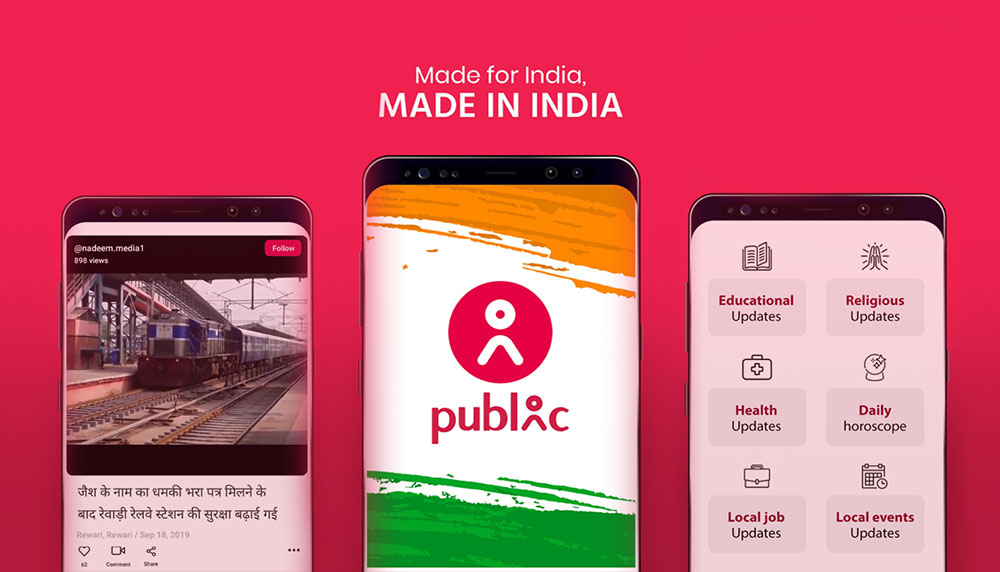
Upon opening the app, users are presented with a feed of local news videos, making it easy to stay informed about developments in their area. The use of video as the primary format reduces the need for extensive reading, which can be a barrier for some users.
Navigation is intuitive, with clearly defined sections that allow users to explore different categories and regions. This ensures that even first-time users can interact with the platform without difficulty.
The overall user experience is optimized for accessibility, making it suitable for a wide demographic, including individuals with limited digital literacy.
Performance, Scalability and Reliability

Public App has built a technological infrastructure capable of supporting millions of users across various regions. The platform is designed to handle high volumes of video content while maintaining performance and stability.
Load times are optimized to ensure that users can access content quickly, even in areas with limited network connectivity. This is particularly important in rural and semi-urban regions, where internet speeds may vary.
Scalability remains a key focus area as the platform continues to expand its user base. Investments in backend systems and cloud infrastructure enable it to manage increasing demand without compromising user experience.
Reliability is critical for a news platform, and Public App’s ability to deliver timely updates consistently has contributed to its growing popularity.
Data Governance and Content Moderation Challenges
Operating a platform that relies heavily on user-generated content presents unique challenges in terms of data governance and content moderation. Public App must balance the need for real-time reporting with the responsibility of ensuring accuracy and credibility.
The platform employs a combination of automated tools and human oversight to monitor content and enforce community guidelines. However, given the scale and diversity of content, achieving complete accuracy remains a complex task.
Efforts to improve moderation processes are ongoing, with a focus on enhancing detection systems and increasing transparency. Building trust among users requires continuous improvement in how content is managed and verified.
Data privacy is another important consideration, and the platform adheres to standard practices to protect user information. As regulatory frameworks evolve, Public App’s approach to data governance will likely continue to adapt.
Impact on Local Journalism and Information Access
Public App has played a significant role in reshaping local journalism by providing a platform for grassroots reporting. It enables individuals to share stories that might otherwise remain unnoticed, thereby expanding the scope of news coverage.
This democratization of information has both positive and complex implications. On one hand, it increases visibility for local issues and empowers communities. On the other hand, it raises questions about content verification and journalistic standards.
Despite these challenges, the platform has contributed to making information more accessible, particularly in regions where traditional media presence is limited. It serves as a bridge between communities and the broader digital ecosystem.
Competitive Landscape and Differentiation
The digital news space in India includes a mix of traditional media outlets, aggregators, and emerging platforms. Public App differentiates itself by focusing exclusively on hyperlocal content and leveraging user participation.
Unlike platforms that prioritize national or global news, Public App’s strength lies in its ability to deliver highly localized updates. This focus allows it to serve a niche that is both large and underserved.
Its use of video content and regional languages further enhances its competitive positioning. By aligning its features with user preferences, the platform has been able to maintain relevance in a rapidly evolving market.
Growth Trajectory and Market Expansion
Public App’s growth reflects broader trends in India’s digital ecosystem, where localized platforms are gaining traction. The platform has expanded its presence across multiple states, attracting a diverse user base.
Its ability to scale rapidly is supported by continuous improvements in technology and user experience. As more users adopt smartphones and access digital services, the platform’s reach is expected to grow further.
Investment in infrastructure and strategic partnerships has enabled Public App to strengthen its position within the market. Its growth trajectory highlights the potential of hyperlocal platforms in the Indian context.
Advertising Model and Revenue Architecture
A critical aspect of Public App’s long-term sustainability lies in its monetization strategy, which is closely aligned with its hyperlocal positioning. Unlike traditional digital advertising platforms that rely heavily on broad audience targeting, Public App leverages location-specific advertising to deliver highly relevant promotions. This allows local businesses, small retailers, and service providers to reach audiences within a defined geographic radius, making advertising more efficient and cost-effective.
The platform’s revenue architecture is built around this localized advertising model, where businesses can promote services, events, and offers directly to nearby users. This not only enhances the effectiveness of advertisements but also integrates commerce into the content ecosystem. By aligning advertising with user intent and location, Public App creates a more organic and less intrusive promotional experience compared to conventional digital platforms.
As digital advertising continues to evolve, hyperlocal targeting is expected to become increasingly valuable. Public App’s early adoption of this model positions it well to capture a significant share of this emerging market segment.
Role in Bridging the Information Gap in Semi Urban India
One of the most significant contributions of Public App is its role in bridging the information gap in semi-urban and rural regions. In many parts of India, access to timely and relevant information remains limited due to the absence of strong local media infrastructure. Public App addresses this gap by enabling real-time content sharing from within the community itself.
This localized flow of information ensures that users are informed about developments that directly impact their daily lives, such as civic issues, local governance updates, and community events. By decentralizing information distribution, the platform reduces dependency on centralized media channels and empowers individuals to become active participants in the information ecosystem.
The impact of this shift extends beyond convenience. It contributes to greater awareness, improved civic engagement, and a more informed population, particularly in regions that have historically been underserved by mainstream media.
Integration of Video First Content Strategy
Public App’s emphasis on video content reflects a broader trend in digital consumption patterns, where users increasingly prefer visual formats over text. Video content is not only more engaging but also more accessible, particularly for users with varying levels of literacy.
The platform’s video-first strategy enables users to quickly consume information without the need for extensive reading. This is especially important in a diverse market like India, where language and literacy barriers can limit access to information.
By prioritizing video as the primary content format, Public App enhances user engagement and ensures that information is communicated effectively. This approach also aligns with the growing popularity of short-form video content across digital platforms, reinforcing its relevance in the current media landscape.
Challenges in Content Authenticity and Verification
While the decentralized nature of Public App’s content model offers numerous advantages, it also introduces challenges related to authenticity and verification. User-generated content, particularly in real-time scenarios, can sometimes lead to the spread of unverified or misleading information.
Addressing this issue requires a multi-layered approach that combines technology, policy, and human oversight. Public App continues to invest in improving its content verification mechanisms, including automated detection systems and manual review processes.
However, maintaining a balance between speed and accuracy remains a complex challenge. The platform must ensure that content is delivered quickly while also upholding standards of reliability and credibility. This ongoing effort is critical to sustaining user trust and ensuring the platform’s long-term viability.
Socio Economic Impact on Local Communities
Beyond its role as a digital news platform, Public App has broader socio-economic implications. By providing visibility to local issues and businesses, it contributes to the economic activity within communities. Small enterprises can leverage the platform to promote their services, while local events gain greater participation through increased awareness.
The platform also creates opportunities for individuals to engage in content creation and reporting, potentially opening new avenues for income generation. This aligns with the broader trend of digital platforms enabling new forms of employment and entrepreneurship.
In this context, Public App functions not only as a media platform but also as a catalyst for local economic development. Its impact extends beyond information dissemination, influencing how communities interact, transact, and grow.
Regulatory Environment and Policy Considerations
As digital platforms continue to expand, regulatory frameworks are evolving to address issues related to content, data privacy, and platform accountability. Public App operates within this dynamic environment, where compliance with regulations is essential for sustained growth.
Government policies related to digital media, intermediary guidelines, and data protection have a direct impact on how platforms function. Public App must continuously adapt its policies and systems to align with these regulatory requirements while maintaining operational efficiency.
This regulatory landscape presents both challenges and opportunities. While compliance may increase operational complexity, it also contributes to building a more structured and trustworthy digital ecosystem. Platforms that can effectively navigate this environment are likely to gain a competitive advantage.
Technological Evolution and Future Innovation
Looking ahead, technological innovation will play a key role in shaping the future of Public App. Advancements in artificial intelligence, machine learning, and data analytics have the potential to enhance content personalization, improve moderation systems, and optimize user experience.
The integration of these technologies can enable more accurate content recommendations, better detection of misinformation, and more efficient platform management. Additionally, emerging technologies such as voice interfaces and vernacular AI could further improve accessibility for users who are not comfortable with text-based interactions.
Innovation will also be critical in expanding the platform’s capabilities beyond its current scope. As user expectations evolve, Public App may explore new features and services that enhance engagement and utility.
Strategic Importance in India’s Digital Media Ecosystem
Public App’s growth highlights the increasing importance of localized platforms within India’s broader digital media ecosystem. As users demand more relevant and context-specific content, platforms that can deliver localized experiences are gaining prominence.
This shift represents a move away from centralized content models toward more distributed and community-driven approaches. Public App’s success demonstrates that there is significant value in focusing on local relevance rather than global scale alone.
Its strategic importance lies in its ability to connect communities, facilitate information flow, and support local economies. As digital adoption continues to expand, platforms like Public App are likely to play an increasingly central role in shaping how information is created, distributed, and consumed in India.
Long Term Outlook and Platform Evolution
Looking ahead, the future of Public App will depend on its ability to balance growth with quality. Enhancing content verification, improving moderation systems, and maintaining user trust will be critical factors in its long-term success.
The platform’s focus on localization and accessibility provides a strong foundation for continued expansion. As digital consumption patterns evolve, Public App may explore new formats and features to enhance user engagement.
Its role within India’s digital ecosystem is likely to become increasingly significant, particularly as demand for localized content continues to rise.
